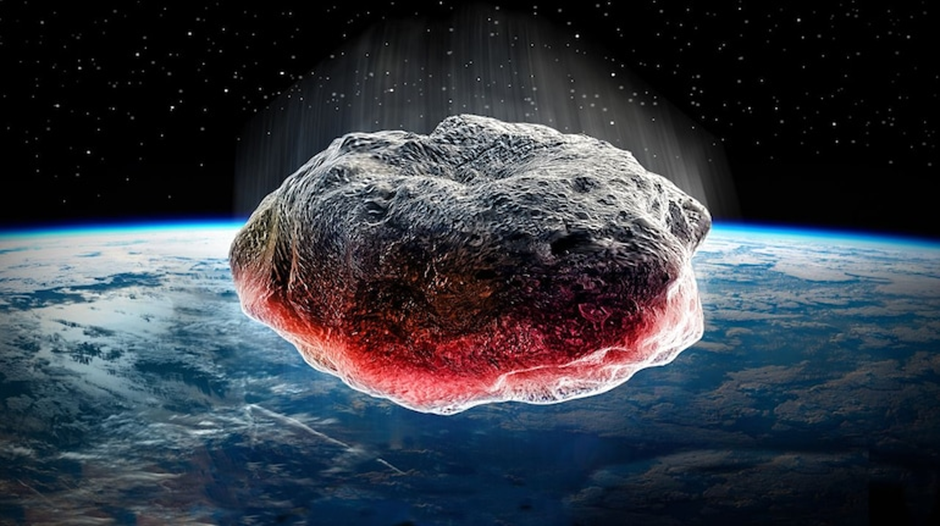
NASA’s Jet Propulsion Laboratory (JPL) reports that these space rocks are set to make their closest passes on September 1.

On September 1, sky enthusiasts and astronomers will have their gaze fixed on an exciting celestial event. Three sizable asteroids are expected to zip past Earth at impressive speeds. According to NASA’s Jet Propulsion Laboratory (JPL), these cosmic visitors will make their closest approaches today. While their sizes are notable, experts assure us there is no cause for alarm.
Asteroid 2024 QM1, a colossal rock with a diameter of about 63 feet—roughly equivalent to a standard house—will glide past Earth at a distance of approximately 1,160,000 miles. Although this may seem relatively close in space terms, NASA confirms there’s no risk of collision. Following this, asteroid 2024 QK1, measuring around 96 feet across, will make its approach on the same day. It will be about 1,980,000 miles away, posing no threat to our planet.
The final asteroid, 2021 JT, is roughly the size of a small jet at 38 feet wide. It will pass within 3,890,000 miles of Earth. Despite its proximity, NASA and other space agencies have assured that it presents no danger.
As these asteroids continue their journey through the cosmos, space agencies will monitor them closely. This cosmic event serves as a fascinating reminder of the ever-changing dynamics of our solar system, but there is no need for concern—Earth remains safe and sound.